
New to the sports betting scene? Welcome! You are going to love it here. But before you get started, you probably have a ton of questions. And that’s great, because we’re here to walk you through all of them.
From how to choose the best sportsbook for you to bet types and how to place wagers to advice on how to best manage expectations, we are here to help you start your journey from scratch.
Consider this your first order business: scroll onward to find out, step-by-step, how you go from sports betting novice to a pro’s pro.
Step 1: finding and signing up with a sportsbook
The first step in almost any process is usually the most important one. Starting your road on how to make money sports betting is no different. It all begins with choosing the right sportsbook.
Many will tell you to dig into betting-site game markets and other nitty-gritty areas. Don’t worry about going so far into the weeds. You are just starting out. Reputation and reliability are what matter most at the outset.
It just so happens that researching sportsbooks is easier than ever, too. The proliferation of sports betting over the past decade or so has left you with a wealth of information at your disposal. While much of it is highly useful, it can also be overwhelming. So, you should start out by asking yourself, as a general consumer, what’s most important to you.
To this end, we recommend ranking the following priorities in order of what’s most important to you:
Sports that you actually want to bet on
This is going to be the most important priority for many. Although pretty much every sportsbook has a deep catalog of events for which it offers odds, betting sites can develop reputations for more extensive offerings or lesser options across a certain league and market.
These differences matter. Especially if you are looking to bet on sports that aren’t considered mainstream. Every sportsbook carries extensive odds on the NFL, but not necessarily cricket.
Perusing the full list of sports offered by a betting site is a must. But if you are looking to streamline the process, we have specifically reviewed sportsbooks based on the following markets:
- NFL
- College football (NCAAF)
- NBA betting
- College basketball (NCAAB)
- MLB betting
- NHL betting
- Soccer betting
- Golf
- Tennis
- Horse Racing
- MMA/UFC
- Boxing
- Formula 1
- Moto GP
- NASCAR
- Esports
- Olympics
- Cricket
- College Baseball
Promotional campaigns and bonus money
Are you a bargain hunter at heart? Well, then you will want to choose one of the sportsbooks that offer aggressive welcome bonuses. These offers typically come in the form of offering you a percentage of your first deposit or free bets.
For our money, if bonuses matter to you, you will want to select a sportsbook that offers at least a 50 percent welcome bonus and also gives existing customers reload bonuses. The latter is basically a smaller version of the welcome bonus that they apply to each subsequent deposit you make.
When going this route, we also recommend reading about rollover requirements. All bonuses come with them, and they are among the most important factors when journeying through your sports betting how-to. While every site is different, here’s the quick and dirty formula: If you are claiming a bonus worth $50 with a 10x rollover, you must bet that $50 on 10 separate occasions before you have the right to withdraw it.
Deposit options and withdrawal speeds
One of the most important elements of figuring out how to win at sports betting is actually getting your money where it needs to go in a timely fashion. When making deposits, you don’t just want your funds to be approved right away; you also want to use your most preferred payment method. Whether that is debit or credit, wire transfers, cryptocurrency, e-wallet transfers or something else, rest assured, there is a sportsbook for you. And wouldn’t you know it, we have a sportsbook payment methods guide that will walk you through the best betting sites by transaction type.
On the other end of the spectrum, you may also want a sportsbook that doesn’t make you wait before transferring out your winnings. Every sportsbook has a different process. Most of them are pretty streamlined, but you should check out FAQ pages or contact customer service to get confirmation on how long it will take you to cash out.
Customer service
Do you want a sportsbook with 24/7 live chat assistance? A betting site that offers you the opportunity to speak with actual humans? Are you okay with customer service officials calling you? Would you prefer emails?
If having help available to you is the most important part of your internet experience, pick a sportsbook based on how accessible their customer service representatives are. In our experience, nothing beats sites that have a 24/7 live chat option.
Step 2: signing up with the sportsbook you choose
Okay, you have officially chosen a primary sportsbook. (You can have more than one, but don’t overdo it when starting out!) Next up: Actually signing up.
This is a quick and easy part of the process. Just fill in all the requested information, which usually comes down to your name, an email address and a payment method to begin bankrolling your account.
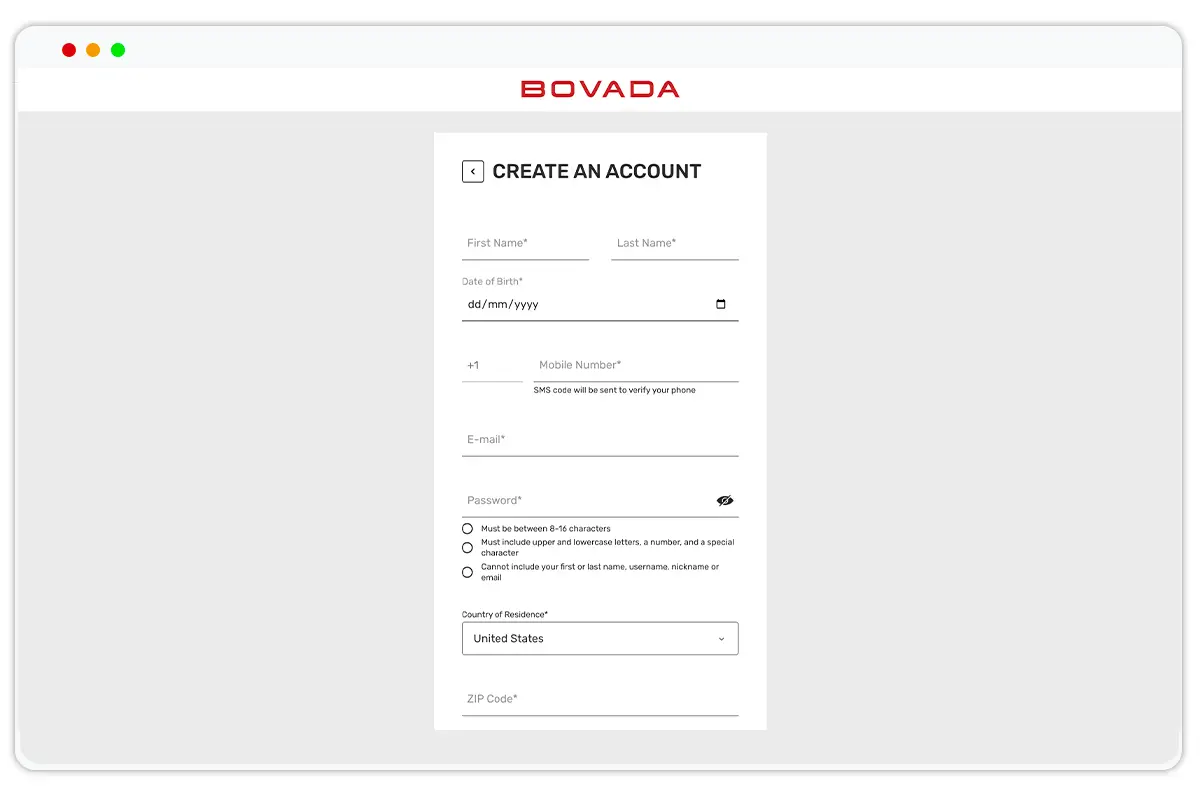
With that said, some sites will take extra steps to verify age. Don’t panic if that extra layer of security exists. However, if you find that the sign-up process requires extra-personal information (social security number, mother’s maiden name, etc.), that’s a surefire sign you’ve chosen a seedy operation and it’s time to restart the “find a sportsbook process.”
Of course, if you simply select from our list of the best online sportsbooks based on the top priorities we outlined above, you don’t have to worry about landing with anything other than a reputable outfit.
Once your account is created, you will need to make your first deposit. This is essentially part of the sign-up process and also incredibly simple. Select the preferred payment method from the options available to you, input whatever information the site requires, and you can have money in your account just a few minutes later. Bear in mind, however, that certain deposit methods can take longer to approve and hit your account. The fastest options tend to be e-wallets and crypto, but wire transfers and debit/credit transactions can often be instant as well depending on your bank.
Step 3: it’s time to start betting!
The most exciting part of the process has arrived: It is time to build your first betting ticket! In order to do so, you need to understand the different wager types and how to bet on markets that best suit your needs and understanding. We’ll be going over all of that here!
Everything we go over below will be referencing odds and winnings in financial currency. While we don’t recommend joining up with a sportsbook that operates in units when first starting out, we do have a guide on how to sports bet using units that you can check out.
With that out of the way, though, let’s run through all the bet types you need to know.
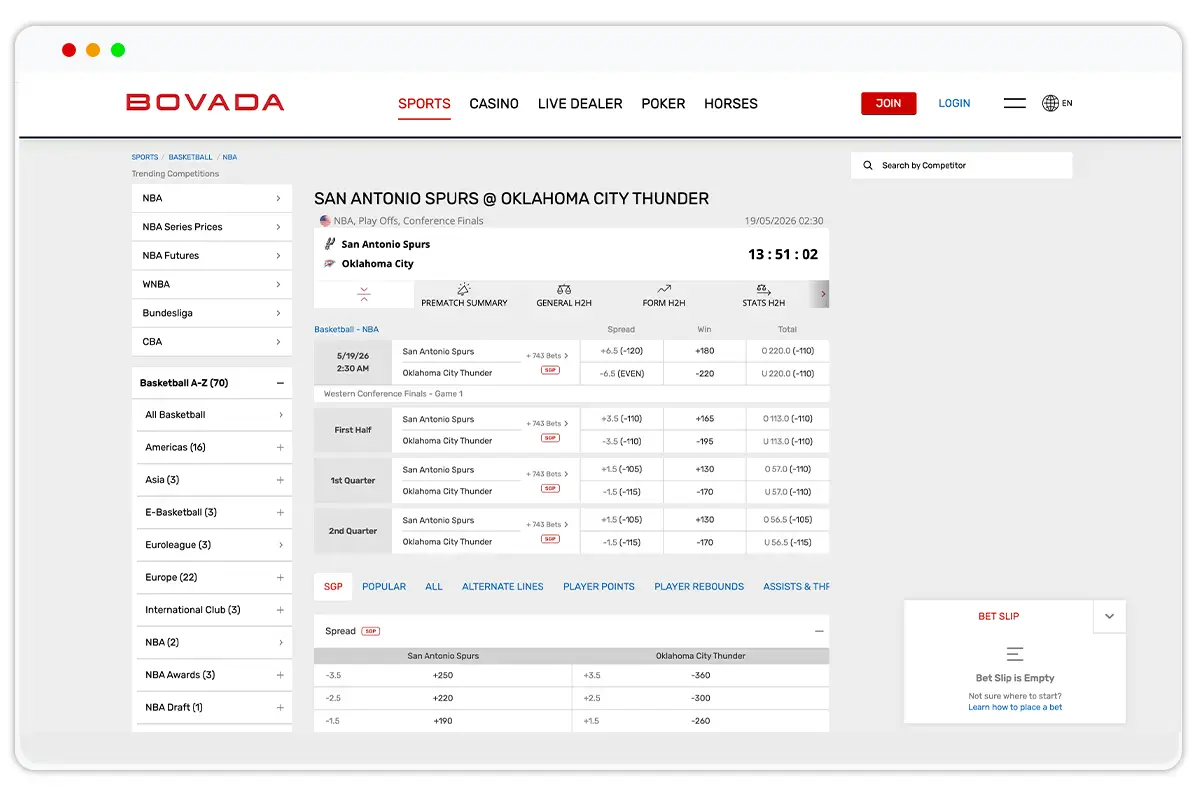
Moneyline and how to read odds
These are wagers in which you are effectively betting on a given event happening—mostly a team winning. The numbers that next to each option allow you to calculate how much money you stand to win, depending on whether you choose the favorite or the underdog.
Let’s say you are an NFL fan and see the following moneyline option:
| Kansas City Chiefs (-110)
Baltimore Ravens (+110) |
In this instance, the “-110” moneyline shows that the Chiefs are favorites, and that you must bet $110 to make a $100 profit. On the flip side, the “+110” shows that the Ravens are the underdog, and that you will make a $110 profit if they win for every $100 you bet.
Keep this example on how to read betting odds in your back pocket. The rules apply to the payouts on every type of wager to follow.
Point spread betting
While there are a handful of differences between moneyline betting and point spread betting, they can be summed up as such: Where moneyline wagering requires you to pick whether a team wins or a certain event happens, point spread betting requires you to choose the margin of victory or loss.
Here is an example of a potential NFL point spread:
| Kansas City Chiefs, -7.5 (-115) vs. Baltimore Ravens, +7.5 (-115) |
The “7.5” is the number you are betting on. A “-7.5” means the Chiefs must win by eight or more points for your wager to hit. The “+7.5” means that the Ravens must lose by fewer than eight points or win the game for the bet to be successful. The outcome here is called covering the point spread. So, if the Chiefs win by nine points, they have covered the point spread.
In each case, meanwhile, the “-115” shows you how much money you’d need to bet ($115) to make a $100 profit.
Over/under
Though over/under betting is most popular in football, it comes into a play for a host of different markets. Usually, you are betting on the final combined score of a game or match.
Rather than regurgitate our NFL betting example, let’s take a look at possible MLB over/under line:
| Los Angeles Dodgers vs. San Francisco Giants, o/u 9.5 (-110) |
The “9.5” is how many runs the Dodgers and Giants would score combined. If you bet over 9.5, they need to tally 10 or more combine runs for you to pick up a victory. If they bet under 9.5, you need them to total nine or fewer runs to emerge victorious.
As ever, the “-110” here highlights how much money you must stake ($110) in order to make a $100 profit.
Parlay betting
Parlay betting refers to combining multiple single wagers into one bet. You must populate your bet slip with a minimum of two wagers to build a parlay. Because you are stacking multiple outcomes on top of one another, you increase your potential payout. However, every single prediction on your ticket must prove accurate, otherwise the entire bet fails.
For instance, let’s say we build a parlay using the three wagers we just went over:
| Chiefs to beat Ravens (-110) |
| Ravens +7.5 point spread vs Chiefs (-115) |
| Dodgers and Giants over 9.5 runs (-110) |
Assuming you parlay these three wagers together, your bet is successful if the Chiefs beat the Ravens, but only by fewer than eight points, and if Dodgers and Giants combine to score 10 or more runs.
In the event even one of these three bets goes down as a loss, your entire wager does, too. You only win if you go three-for-three.
Prop betting
Many people now view prop betting as the core of their sportsbook strategy, so it’s important at least to understand what they are. In essence, these are “micro” wagers on event outcomes happening within the larger flow of a competition. Instead of wagering on the moneyline, over/under or point spread for an entire game, you can do it by quarter, half, period, whatever.
Prop betting can also entail placing money on individual outcomes rather than an entire team. You can bet on how many passing yards Patrick Mahomes will have for the Chiefs, how many rushing yards Lamar Jackson will have for the Ravens and so on.
What’s more, prop betting can pertain to events surrounding the game rather than the game itself. When it comes to betting on the Super Bowl, for instance, many like to place money on the coin toss result, length of the national anthem, the average price of a ticket, the color of the halftime performer’s shirt and anything that falls into that bucket.
Future bets
On future bets, you will be asked to forecast outcomes against a larger field—division, conference, whole league, etc.—months in advance of the actual finish. Pretty much all of these bets come against the moneyline.
Take a look at some hypothetical Super Bowl odds for 2027:
| Kansas City Chiefs (+450) |
| San Francisco 49ers (+500) |
| Baltimore Ravens (+650) |
| Dallas Cowboys (+900) |
| Philadelphia Eagles (+1200) |
Each of these teams pays out better than 1-to-1. That’s typical in futures markets, since every franchise is competing against 31 others for the Lombardi Trophy.
Odds also shift when you narrow the field to a division or conference. In those cases, your bet is on a smaller pool of teams, but the principle is the same: your wager only cashes if your pick wins the division, conference, or Super Bowl outright. If they fall short, the bet is lost.
Pro tip: place futures bets before the season starts. That’s when odds are usually most generous and widely available.
Live betting
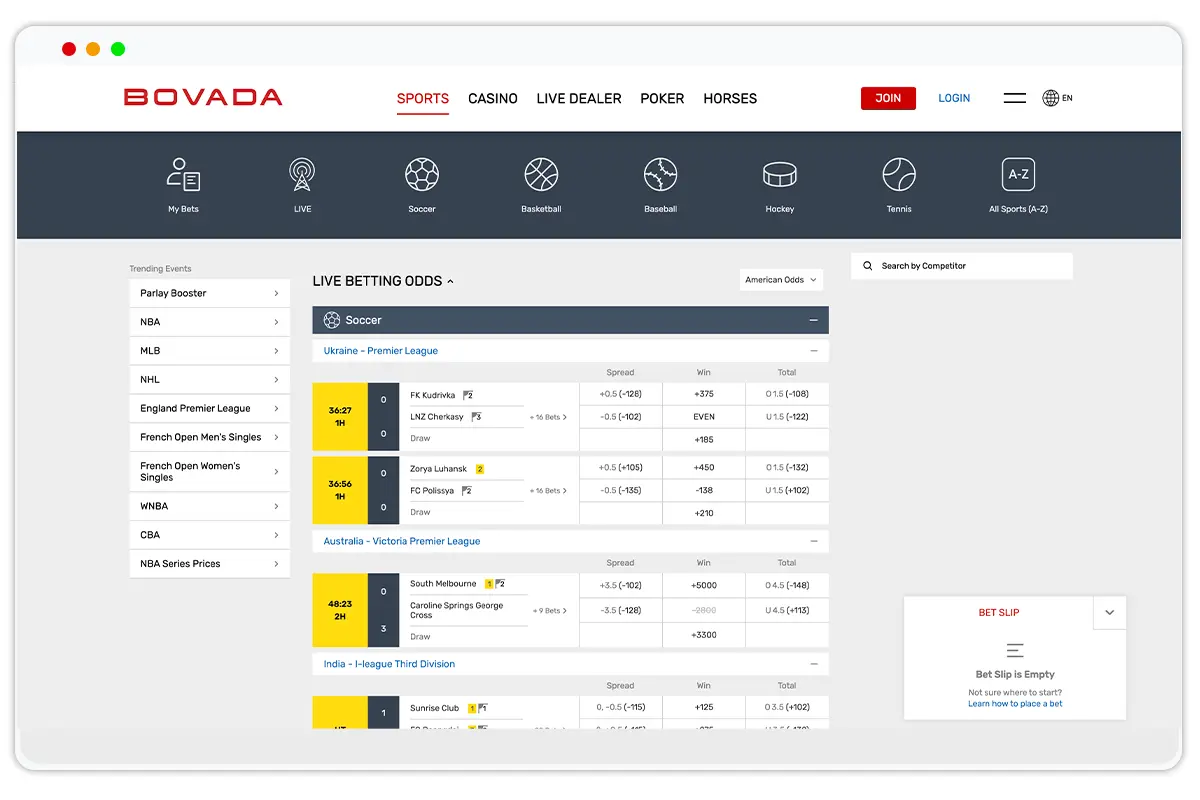
Live betting is exactly what it sounds like: You are placing wagers after an event has already started. All sportsbooks offer live betting now, and the options could be anything: moneylines, over/unders, point spreads, player props, whatever.
Just make sure that you act quickly when placing a live wager. True to its name, odds adjust in real-time. If you hesitate, you may place a bet with vastly different odds than you intended.
Round robin bets
Some people are intimidated by round-robin bets. You needn't be. They are simply a series of mini parlays you bet under the umbrella of one lump sum that covers every possible two-team combination.
Let's say you're looking at the following three-point spreads: Dallas Cowboys (-3), Seattle Seahawks (+2.5) and Arizona Cardinals (+5.5). By creating a round-robin ticket, you'll place three wagers on two-team combinations: Dallas-Seattle, Dallas-Arizona and Arizona-Seattle.
Sure, you could parlay all three. But after doing this, you've raised the stakes from the individual bets, but you've also protected yourself against one single outcome ruining a three-team parlay.
Step 4: do you want to use a betting strategy for beginners?
Not all betting strategies are suited for gambling newbies. Concepts such as arbitrage betting and matched betting are best left explored by those who have been around the block a few times. That said, there are a couple of standout blueprints novices should consider employing. It is perfectly fine if you'd like to go off your own intuition, but if you prefer systematic approaches, one of the following might appeal to you.

Parlay of heavy favorites
Even the biggest favorites can lose, but some matchups make an upset seem almost impossible. These are the kinds of moneylines you’ve probably seen before: maybe the Kansas City Chiefs at –750 or the Los Angeles Lakers at –550. Heavy favorites are situations where the win probability is sky-high.
On their own, these bets don’t pay much. Wagering $750 on the Chiefs at –750 would only net $100 in profit. But if you combine several heavy favorites into a parlay, you can boost your potential return to better than even money while still leaning on strong favorites
Underdog betting strategy
Working underdog moneylines is all about trying to capitalize on potentially huge payouts.
Perhaps you browse the latest NFL odds and see that the New York Giants are a +650 to win against the heavily favored Green Bay Packers. Turning a $650 profit for every $100 you risk is tantalizing, but the odds also suggest there is a very little chance of that happening.
It's a different story if you actually believe the Giants have a much better than the expected shot at squeaking out a victory. Maybe Green Bay's quarterback is questionable with an injury and you don't believe he'll be too effective even if he does play. Or perhaps you've seen lines at other sportsbooks that paint New York as a shorter underdog. Whatever the case, if you can spot long-shot outcomes that you actually believe in, you can play for higher possible returns than if you placed singular investments in favorites.
Step 5: managing your sportsbook account and expectations
If you have come this far, congratulations! You are officially ready to bet on sports as you see it. Whether you do it daily, weekly, only during tent-pole events, whatever, it’s mission critical to expertly manage your account and expectations.
Keeping track of your bankroll and overall finances is most important. Only bet money that you are prepared to lose. If you are using a betting strategy, make sure to see it through before abandoning it, all while staying within your limits.
It is also best to bet on the sports and events about which you know the most. If you are an NFL aficionado but don’t pay attention to college football, don’t just wade into the NCAAF waters because you see it has extensive wagering options.
Yet, you should not be afraid to experiment, either. Once you have all the basics down, feel free to read up on and try out more advanced strategies, different bet types and new sports. Whenever trying something new, though, you will want to tighten the purse strings even further. Lower your average wager considerably until you’re comfortable with the new sport, market or strategy you’re testing out.
Last, but certainly not least, do not view betting on sports as a get-rich quick scheme or full-time job. This entire process is best if approached through the lens of entertainment. It should be fun. It should not be stressful. And it definitely should not be financially gutting.
Follow everything we’ve laid out here, and we can confidently say you’re ready to enter the sports betting sphere. Welcome, and most of all, good luck!