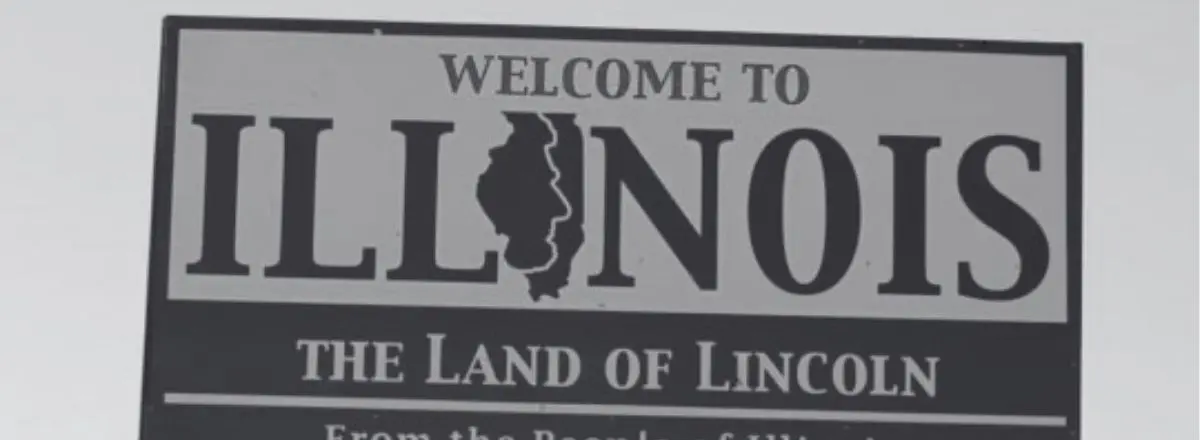
The Illinois sports betting market may never be the same.
Governor JB Pritzker previously led the charge to hike taxes for sportsbooks in The Prairie State. In response to his tiered-expense increases being implemented, Illinois sports betting sites instituted per-wager fees. They range from FanDuel assessing a $0.50 surcharge on each bet to Fanatics Sportsbook charging customers $0.25 per bet.
This money does not seem like much on its face. But it adds up when you account for the sheer volume of sports betting in Illinois. If you use the 2024 gambling handle in The Prairie State as a baseline, even an extra $0.25 per transaction comes out to tens of millions of dollars.
Experts were mostly split on whether this would have an impact on Illinois sports betting habits. Many thought any dip would be negligible. Others believed sportsbooks would not incur any downturn in volume.
Well, with the 2025 calendar year on the verge of closing, we now have our answer.
Illinois Sports Betting Volume Has Dropped Since Operators Implemented Per-Wager Fees
Here is Eric Ramsey of Legal Sports Report with the lowdown on how the new fees are impacting the betting market:
Illinois sports betting is already feeling the effects of a new per-wager tax, but perhaps not in the way lawmakers hoped. Bettors in the state wagered $1.42 billion in September, up 9 percent year over year to reach a new record for the first month of football season. Ticket count tumbled 15 percent to 30.6 million, though, with DraftKings and FanDuel enduring the biggest drops. The two top national brands both instituted a per-bet surcharge in Illinois beginning on Sept. 1 to offset the tax increase that took effect in July. The tradeoff was an extra $740,920 in taxes paid this September despite the wager tax amounting to $10.6 million this year. Operators generated $103 million in gross revenue in September compared to $135 million last year.
“The single-digit handle increase for September looks good at a glance, but it does suggest a possible cooling-off against the 16 percent growth across the first eight months of the year. Handle for the two leaders was up just 3 percent to create some drag on the statewide totals and trends. The average ticket size for the month ballooned to $46.44, a 28 percent increase from last September’s $36.20. Keith Whyte, former executive director of the National Council on Problem Gambling, wrote last month about the negative impacts of higher bets.
Peter Jackson, the CEO of FanDuel’s parent company Flutter, has since noted that the fees had zero impact on the company's quarter three earnings. But that doesn’t really answer the longer-term questions.
Minimum Bets Could Also Be Impacting The Illinois Gambling Market
It isn’t just per-wager fees that may be dissuading Illinois sports betting volume. Per-bet minimums act as a roadblock, too.
For those Illinois sportsbooks not charging a per-wager fee, they have instead set the minimum dollar amount customers can bet anywhere between $1 and $10. While the single-dollar minimums will not serve as a roadblock, the $10 benchmarks certainly get iffy. So many people who bet on sports in the United States like to build ultra-cheap parlay tickets, on the off chance their longer-than-long-shot slips hit. Tossing $1 on that ticket isn’t something most people feel. That calculus changes once you get to $5. It most certainly shifts when you’re up to $10.
Even if the volume doesn’t materially dip for the market moving forward, the betting minimums could feasibly promote destructive behavior. Increasing the total amount people are betting raises the average of what they’re losing. That’s why, as Ramsey noted in his LSR piece, bigger-average wagers are considered dangerous. They are potential gateways to problem gambling—at a larger scale.
The Real Test for Sports Betting in Illinois is Coming
Whether state legislators and/or sportsbooks in Illinois should be concerned remains to be seen. Not enough time has passed since the per-wager fees and betting minimums were implemented. A span of months is nothing. Industry trends require at least a year’s worth of data before declaring a new trend.
Still, the Illinois sports betting tax rate has effectively doubled for operators since House Bill 4951 took effect. If sports betting sites in Illinois see that their ticket counts are sliding while they’re shelling out more overall money in taxes, something will have to give.
With all of that said, we will need to wait for a tent-pole gambling event for a better understanding of the dynamics at play. We are talking, of course, about betting on the Super Bowl.
Action on the NFL’s big game is the most lucrative of any sporting event in North America. The futures market itself is lucrative. But Super Bowl betting business really takes off during the two weeks between conference championships and opening kickoff. During that time, fans flock toward not only game lines, but all types of props and micro bets.
Across most markets, almost without fail, Super Bowl betting volume has generally increased in every state since 2018. If that changes for the Illinois sports betting market in February 2026, it may give way to a larger conversation.
How would that discussion go? What would come of it? Is there a solution or adjustment to be made if sports betting business plummets in The Prairie State? Only time can tell.
Take a look at this list of the top online sportsbooks so you can find one that works for all of your sports betting needs:
-
EXCLUSIVE BONUS
 50% up to $250Play Now
T&C apply, 18+, Play responsibly
-
EXCLUSIVE BONUS 125% up to $1,250Play Now
T&C apply, 18+, Play responsibly
-
EXCLUSIVE BONUS 225% up to $3,625Play Now
T&C apply, 18+, Play responsibly
-
50% up to $250Play Now
T&C apply, 18+, Play responsibly
-
125% up to $2,500Play Now
T&C apply, 18+, Play responsibly