Daily fantasy sports (DFS) and pick’em-style games operate in a legally uncertain and increasingly high-risk grey area in California. For many years, major DFS platforms accepted California players without explicit approval or prohibition under state law. That changed when the California Attorney General issued a formal legal opinion stating that paid DFS contests can qualify as illegal sports wagering under California law.
Is Daily Fantasy Sports Legal in California? (Short Answer)

While that opinion did not immediately shut down DFS platforms, it significantly altered the legal landscape. DFS in California is no longer best described as “unregulated but tolerated.” Instead, players should understand that DFS and pick’em games now sit on fragile legal ground, with the potential for sudden product changes, restrictions, or withdrawals from the state.
This guide explains what daily fantasy sports and pick’em games actually are, what changed legally in California, how major apps like PrizePicks, Underdog Fantasy, and Fliff handle California users today, and what you should, and should not, do if you choose to play.
- How DFS and pick’em contests work in California
- What the 2025 Attorney General opinion means for players
- How major DFS apps approach California access
- Safer alternatives for California sports fans
For broader context on California gambling laws and how DFS fits into the state’s overall betting landscape, you can also review our main California betting guide.
What Is DFS & Pick’em? (PrizePicks, Underdog, Fliff Explained)
Daily fantasy sports (DFS) is a form of fantasy competition where players build lineups or make selections based on real-world athlete performance. Unlike traditional season-long fantasy leagues, DFS contests are settled over a single day or event and usually involve entry fees and cash prizes.
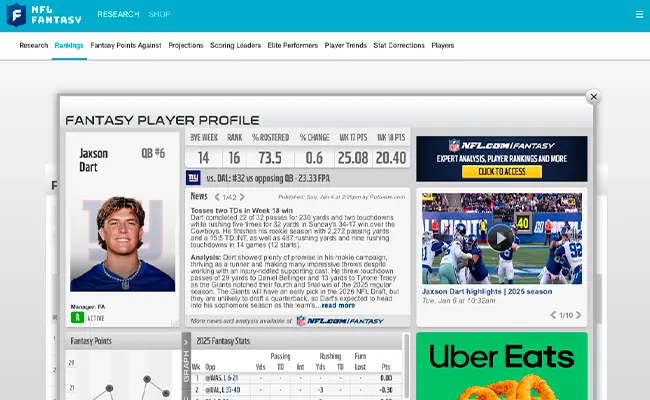
Over time, DFS has evolved into several different product types. Understanding these differences is important, especially in California, where each format can be viewed differently under gambling law.
- Classic DFS (salary-cap contests) – Players draft a lineup of athletes within a salary budget and compete against other users. Payouts are based on relative performance in contests such as tournaments or head-to-head games.
- Pick’em / player prop-style games – Users select “more” or “less” on individual player statistics (points, yards, rebounds, etc.). These contests often feel similar to sports betting and have drawn increased regulatory scrutiny.
Several major platforms are commonly associated with these formats in California:
- PrizePicks – Historically focused on pick’em contests based on player stat projections rather than traditional salary-cap lineups.
- Underdog Fantasy – Offers a mix of draft-style DFS contests and pick’em games, depending on the jurisdiction.
- Fliff – Uses a sweepstakes or social sportsbook-style model, where users play with virtual currency that can sometimes be redeemed for prizes.
While these products are often grouped together under the “DFS” label, they are not all treated the same under the law. That distinction matters in California, where regulators and lawmakers are increasingly focused on how closely DFS and pick’em games resemble traditional sports wagering.
Is Daily Fantasy Sports Legal in California in 2026?
California does not have a statute that explicitly legalizes daily fantasy sports. For many years, DFS operators accepted California players under the assumption that fantasy contests fell outside traditional gambling laws. That long-standing grey area has narrowed significantly.
In July 2025, the California Attorney General issued a formal legal opinion stating that paid daily fantasy sports contests, including both draft-style DFS and pick’em formats, can qualify as illegal sports wagering under existing California law. This opinion did not create a new law, but it clarified how the state’s top legal authority interprets DFS under current statutes.

Because the opinion is advisory rather than legislative, it does not automatically shut down DFS platforms. However, it substantially increases legal risk for operators and adds uncertainty for players. DFS in California should now be viewed as legally fragile instead of clearly permitted.
Legal snapshot (California DFS):
- Status: Not explicitly legalized; subject to adverse legal interpretation
- AG opinion: DFS may constitute illegal sports wagering
- Regulatory certainty: Low
- Availability: Subject to change at any time
For readers looking at how DFS fits into California’s broader sports betting laws, our California sports betting legal guide provides additional context. You can also review the California Department of Justice’s overview of gambling laws to understand how the state approaches enforcement.
How Major DFS Apps Handle California (PrizePicks, Underdog, Fliff)
Following the Attorney General opinion, major DFS and pick’em operators have taken cautious and flexible approaches to California. Instead of committing to a single, permanent product model, most platforms now adjust their offerings based on legal risk, internal policy, and evolving guidance.
The key thing for California users to understand is that DFS availability is not guaranteed. Contest types, payout structures, and even full market access can change with little notice. What is available today may not be available tomorrow.
| Platform | Primary Product Type in CA | Key Limitations | Notes |
|---|---|---|---|
| PrizePicks | Pick’em-style contests | Contest formats and rules subject to change | Availability may shift based on legal interpretation |
| Underdog Fantasy | Draft-style DFS / limited pick’em | Restricted formats compared to fully legal states | Products vary by jurisdiction and risk tolerance |
| Fliff | Sweepstakes / social sportsbook model | No traditional real-money wagering | Structure differs significantly from DFS betting apps |
None of these platforms publicly guarantee long-term access in California. Operators may pause registrations, remove certain contest types, or change how winnings are redeemed if regulatory pressure increases.
Because the situation remains fluid, California players should avoid assuming that DFS products are stable or legally protected. The most reliable way to stay informed is to follow updates specific to California betting and gaming developments.
For ongoing coverage of regulatory changes, enforcement actions, and operator responses, see our California sports betting and gaming news index.
What You Can & Can’t Do as a DFS Player in California
Given the current legal uncertainty around daily fantasy sports in California, players need to be especially cautious about how they use DFS and pick’em apps. While some platforms still allow California users, that access is not guaranteed and can change quickly.
You can:
Stick to Approved Platforms
Play DFS or pick’em contests only on platforms that explicitly allow California players in their terms.
Stay Policy-Aware
Read and monitor operator updates, as contest formats and availability may change.
Limit Your Exposure
Keep balances modest and withdraw winnings regularly.
Understand the Risk
Treat DFS as a higher-risk activity rather than a stable, regulated product.
You should NOT:
- Use a VPN or location-masking tools to bypass geo-blocks or access restricted contests.
- Misrepresent your location or personal details during registration or verification.
- Assume DFS is legally protected in the same way as a licensed sportsbook.
- Ignore changes to terms and conditions that affect California users.
The most common mistakes California players make involve assuming that continued access means legal approval. In reality, DFS platforms are operating under legal pressure, and users bear the risk if products are restricted or discontinued.
If you are uncomfortable with that level of uncertainty, it may be worth considering alternative ways to engage with sports that do not rely on DFS access remaining unchanged.
DFS vs Sports Betting vs Sweepstakes in California
Daily fantasy sports, traditional sports betting, and sweepstakes-style platforms are often grouped together, but they are treated very differently under California law. Understanding these distinctions helps explain why none of these options currently offers a fully regulated, low-risk solution for California players.
DFS and pick’em games were long positioned as skill-based contests rather than gambling. However, the Attorney General opinion challenged that view by stating that paid DFS contests can qualify as illegal sports wagering under existing law. This places DFS in a legally fragile position.
Sports betting is more straightforward. California has not legalized retail or online sports betting, and there are no state-licensed sportsbooks operating in the state. Major regulated apps such as FanDuel, DraftKings, and BetMGM cannot legally take real-money bets from California residents.
Sweepstakes and social sportsbook-style platforms, including models used by apps like Fliff, rely on virtual currencies and promotional sweepstakes structures. While these products were once marketed as a workaround, California has moved to restrict sweepstakes casinos that closely resemble real-money gambling, reducing their reliability as an alternative.
| Product Type | Legal Status in CA | Key Risk for Players |
|---|---|---|
| DFS / Pick’em | Legally uncertain; challenged by AG opinion | Sudden product changes or withdrawal from CA |
| Sports betting | Not legalized | No licensed operators or consumer protections |
| Sweepstakes / social platforms | Increasingly restricted | Account freezes or loss of access |
None of these options currently provides the clarity or consumer protections that exist in states with fully regulated sports betting or online casino markets. California players should approach each with an understanding of the legal and practical risks involved.
For a broader explanation of California’s online gambling rules and how these products fit into the wider legal landscape, see our guides to online gambling and sweepstakes casinos in California.
Banking, Payouts & KYC on DFS Apps in California
Daily fantasy sports apps generally use more traditional banking methods than offshore sportsbooks, but California players should still expect identity checks and possible payment delays, especially given the current legal uncertainty around DFS.
Most DFS platforms that still accept California users allow deposits through standard consumer payment methods. Withdrawals, however, are more tightly controlled and usually require identity verification before funds are released.
- Credit or debit cards are commonly used for deposits
- Some platforms support PayPal or direct bank transfers
- Withdrawals typically require full identity verification (KYC)
- Payouts may be delayed if an operator changes its California policy
| Method | Typical Speed | Notes |
|---|---|---|
| Credit / Debit Card | Instant deposits; slower withdrawals | Withdrawals often routed through bank transfer or PayPal |
| PayPal / Bank Transfer | 1–5 business days | Identity verification required before first withdrawal |
California players should keep account balances modest and withdraw winnings regularly. If a DFS operator decides to change or suspend its California offerings, accounts with large balances may face longer review periods.
It’s also important to read terms and conditions carefully. DFS platforms reserve the right to close accounts, void entries, or delay payments if they determine a user has violated location rules or if legal circumstances change.
Safer Alternatives for California Sports Fans
With daily fantasy sports operating in a legally uncertain environment in California, some players prefer alternatives that offer clearer rules or fewer sudden changes. While no option is perfect, there are ways to follow and engage with sports that do not rely on DFS remaining available in the state.
Offshore sportsbooks
Many California residents use offshore sportsbooks that accept CA players for traditional sports betting. These sites are not licensed in California, but they offer full betting markets without relying on DFS-style formats or sweepstakes models.
Legal horse racing betting
Pari-mutuel horse racing is the clearest legal online betting option in California. Bets can be placed online through licensed racebooks or in person at tracks and off-track betting locations.
Traditional fantasy leagues
Season-long fantasy leagues with friends or coworkers typically fall outside commercial DFS structures, especially when there is no house rake or professional operator involved.
Offshore sportsbooks provide a more familiar sports betting experience than DFS or pick’em contests, including standard odds, spreads, totals, and futures. However, they operate outside California’s regulatory framework, so players should choose established platforms and understand the risks involved.
Horse racing betting remains the most clearly regulated option for Californians who want to place wagers tied directly to real-world results. Unlike DFS, it does not depend on contested interpretations of sports wagering law.
Choosing an alternative ultimately depends on your risk tolerance. The key takeaway is that DFS is no longer the only, or necessarily the safest, way for California sports fans to engage with real-money contests.
Timeline & What Happens Next for DFS in California
Daily fantasy sports did not become controversial in California overnight. The current uncertainty is the result of years of unresolved legal questions, followed by recent actions that have brought DFS under closer scrutiny.
- Pre-2022: DFS operators accept California players while operating in a long-standing legal grey area, with no explicit authorization or prohibition in state law.
- 2022: California voters reject Proposition 26 and Proposition 27, keeping all forms of regulated sports betting illegal and reinforcing the state’s conservative approach to gambling expansion.
- 2025: The California Attorney General issues a legal opinion stating that paid DFS contests can qualify as illegal sports wagering under existing law, significantly increasing legal risk for operators and players.
What happens next is still unclear. California lawmakers could attempt to regulate DFS explicitly, ban certain formats, or fold fantasy contests into a future sports betting framework. Tribal governments, which hold significant gaming authority in the state, are likely to play a central role in any outcome.
Any comprehensive solution is unlikely in the short term. Given past ballot failures and ongoing disagreements between tribes, lawmakers, and commercial operators, the earliest realistic window for broader gambling reform, including DFS clarity, appears to be 2027 or later.
Until then, DFS players in California should assume that availability and rules may change quickly. Following reliable California betting and gaming news is the best way to stay informed rather than relying on outdated assumptions about DFS legality.
DFS & Problem Gambling in California
Daily fantasy sports and pick’em contests can carry many of the same risks as sports betting or online casino games, especially when contests are fast-paced and available at all hours. The legal uncertainty surrounding DFS in California can also add pressure, leading some players to chase wins or rush decisions before products change or disappear.
DFS apps often use frequent notifications, promotional contests, and short settlement windows, which can make it easy to lose track of time and money. These factors increase the risk of problem gambling behaviors, even though DFS is sometimes framed as a game of skill.
- Chasing losses by entering higher-stakes contests
- Using money meant for rent, bills, or essentials to play DFS
- Hiding DFS activity or account balances from family or friends
- Borrowing money or using credit to continue playing
- Feeling anxious or irritable when not checking contests or results
If any of these signs feel familiar, it may be time to pause or stop playing. Setting strict limits, taking breaks, or stepping away entirely are valid and responsible choices.
California residents have access to confidential, free support resources for gambling-related problems:
- California Council on Problem Gambling – Offers education, referrals, and support services for individuals and families affected by gambling-related harm.
- National Problem Gambling Helpline – Provides 24/7 confidential support via phone or online chat for California residents.
Seeking help early can prevent financial and emotional harm. Whether you’re concerned about your own DFS activity or someone else’s, support is available and reaching out is a positive first step.