Round-robin bets were once reserved for diehard sports bettors. Most casual fans stuck with straight wagers and traditional parlays. Round-robins seemed confusing, and the payouts looked smaller compared to a juicy multi-leg parlay. That perception is changing fast. Bettors are realizing that round-robins offer something parlays cannot. They give you a chance to hit on multiple games without needing a perfect ticket.
If you have ever built a four-team parlay only to watch one bad pick torch the whole thing, you get it. Round-robins give you room to be wrong on a pick or two. You can still walk away with a payout. In this guide, we break down how round-robins work, look at a real example, and explain when they make sense.
How does a round robin bet work?
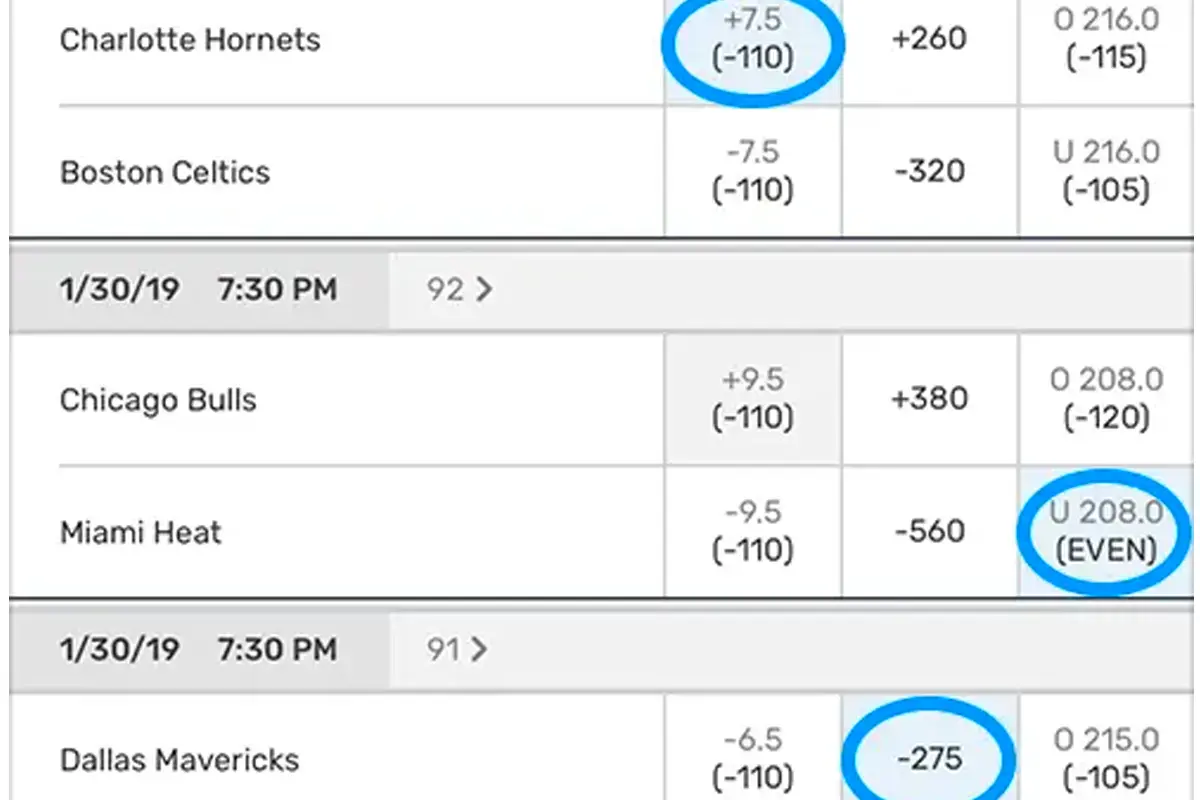
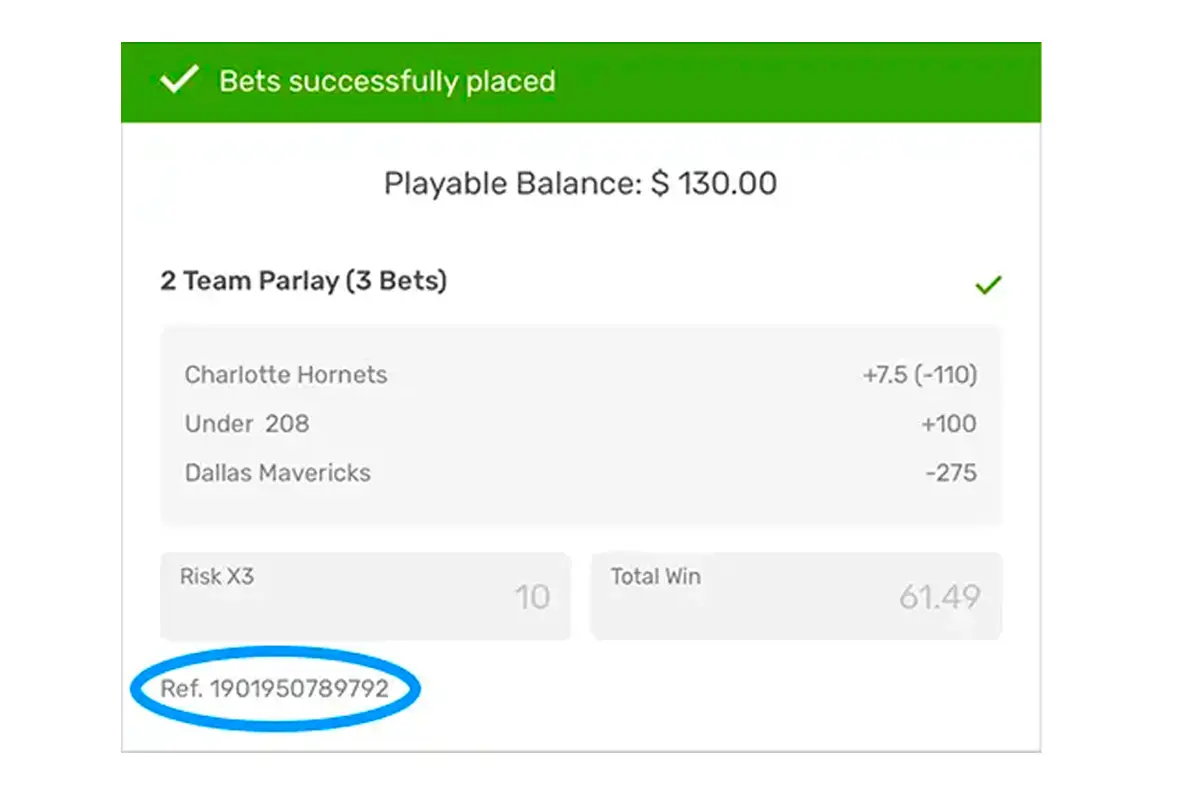
Think of a round-robin as a bundle of mini parlays. You pick a group of games or lines, usually 3 to 10. The sportsbook then builds out every possible parlay combination from your selections. Most bettors stick with two-leg parlays, but you can choose larger groupings, too.
This might sound pricey at first. You are essentially placing multiple separate wagers at once. The good news is you control how much each parlay costs. You set a stake per combination or a total amount the book divides automatically. Your returns come from whichever combinations actually hit.
Here’s a quick example to show how this plays out. Imagine you are looking at three NFL moneylines you like.
Dallas Cowboys, Denver Broncos and Miami Dolphins.
You could parlay all three together. The problem is one loss kills the entire ticket. A round-robin solves this. The book breaks your three picks into three smaller parlays. You end up with Cowboys-Broncos, Cowboys-Dolphins, and Broncos-Dolphins. If one of your three picks loses, two parlays still survive. You can absorb the loss and still come out ahead.
Round-robins are available at nearly every major online sportsbook. They are not always front and center on the bet slip, though. Once you know how to look for them, they are easy to find under the parlay or multi-bet options.
Round robin bet example: breaking down the math
Numbers tell the round-robin story better than words. Let us walk through a realistic scenario together. Say you build a round-robin using three over/under lines, each priced at -110. You put $300 on the ticket total. The book splits that into three two-leg parlays of $100 each. Here is what you are looking at for potential returns:
|
Notice something important. In a three-pick round-robin built from two-leg parlays, you need at least two winning picks to cash one combination. Hitting all three picks produces the biggest payout because every parlay wins. You hit all three, you'll be asking yourself why you didn't just put all $300 on a traditional parlay, you would have won $1787.38. You'll be claiming you knew it would hit, and now you've "lost $695.11."
However, one miss on a regular parlay and you are done. With this round-robin, you have multiple paths to profit. There's a safety net built into round-robins that doesn't exist on regular parlays. The only way to lose everything is to miss on all three picks.
Keep in mind this example uses flat odds on all three picks. Real-world round-robins usually involve different prices, which changes the math. The core lesson still holds. Your job is to land at least one combination so you do not lose it all.
Round robin bet meaning: why bettors like them
More paths to a winning ticket
The biggest selling point is forgiveness. You do not need every pick to hit. A few right answers are enough to keep money flowing back. You just need to land more combinations than you miss. That cushion is what separates round-robins from straight parlays. The goal is to win the majority of your mini parlays. Do that consistently and you will profit.
Way faster than building parlays by hand
Speed is another big advantage. Building all those parlay combinations yourself takes forever. With three or four picks, it is manageable. Once you climb to six, eight, or ten lines, doing it manually is a nightmare. Try assembling ten two-team combinations five minutes before kickoff. It will NOT happen. Round-robins automate the entire process. You pick the lines, set your stake, and submit. The whole thing takes minutes.
When does a round robin bet make the most sense?
Round-robins shine when you have a slate of picks but no confidence in nailing every single one. The more lines you are working with, the better this format gets.
A three or four-leg straight parlay is reasonable. Talking yourself into hitting all three or four picks is doable. Once you start eying five, six or seven lines, that confidence fades fast. Predicting that many outcomes correctly is hard. Unless you are stacking heavy favorites with tiny payouts, the math turns against you.
Round-robins are also useful when you want to play multiple underdogs. The same goes for taking shots on several point spreads at once. Since you do not need a flawless ticket to win money, you have permission to take a few calculated risks. This is not a green light to go nuts on long shots. It does mean you can sprinkle in some bolder plays without sinking the whole ticket.
Props are another great fit for round-robin betting. Instead of stacking team spread, you can build a slate of player props and run the same format. Think Aaron Judge over 1.5 total bases, Shohei Ohtani to hit a home run, and Mookie Betts over 1.5 hits in a single MLB round-robin. Football works the same way. You can combine touchdown scorer props from different games into a multi-leg round-robin.
A typical example might pair Christian McCaffrey to score first, Travis Kelce to find the end zone and CeeDee Lamb to score on a Sunday slate. Props tend to come with higher prices than team bets, which means your round-robin payouts can climb fast even with just a couple of hits.
The fall is the perfect time to get creative with cross-sport round-robins. Multiple seasons run at once, which means you can stack props across sports. Picture a ticket with Aaron Judge to homer, Travis Kelce to score a TD and Kevin Durant to drop 30 points.

Round robin bet explained: strategy tips
There is no one-size-fits-all approach to round-robin strategy. Some bettors prefer small slips or three or four picks. Others load up with eight or more lines for maximum variety. Both styles can work. The right approach depends on how much risk you want to take.
One strategy worth considering is mixing in long shots. We are talking about moneylines priced at +300 or longer. Do not just toss in any random underdog. Look for upset spots you actually believe in. A round-robin gives you cover to take that swing. If the long shot hits, your payout balloons. If it misses, your other parlays can still carry the ticket.
A good rule of thumb is one long shot for every three moneylines. Six picks means two long shots. Nine picks means three. Adjust the ratio based on your appetite for risk.
Another smart move is pairing long shots with what we call quasi-sure things. These are heavy favorites that would barely pay you on a straight bet. Tying one to a long shot is where the magic happens. You are essentially using a near-lock to boost the value of your riskier pick. One side of the parlay is almost guaranteed. The other gives you a chance at a real payday.
Because round-robin bets create multiple parlays at once, total costs can rise quickly. Many bettors use smaller unit sizes on round-robins than they would on straight bets to avoid overextending their bankroll.
Use a round robin bet calculator before you submit
Most sportsbooks offer round-robin betting, but the bet slips can be confusing. They do not always show you a clean breakdown of potential returns. You might not see exactly what each scenario pays out before you confirm. That is where an odds calculator comes in.
A quick online search will turn up plenty of free round-robin calculators. Plug in your lines, your stake, and the odds. The calculator does the rest. It shows you how your money is split across the different parlays. It also tell you what you can win at each outcome. You will know exactly how many picks need to hit before you turn a profit.
Just double-check that your odds are accurate. Even a small mistake on one line throws off the entire projection. Bet with the most current numbers and you will have a clear picture of your ticket.
Pros and cons of round robin bets
Pros
Cons
Round-robins reduce the all-or-nothing risk of traditional parlays.
They work well for large betting slates and prop combinations.
Sportsbooks automatically generate all combinations for you.
Payouts are smaller than a full traditional parlay.
Too many combinations can become difficult to track.
Long losing stretches are still possible with aggressive betting strategies.
Wrapping up the round robin bet
A round-robin bet is simple at its core. You pick a group of games. The book splits them into smaller parlays. You profit from whichever combinations hit. The tradeoff is straightforward. You give up some of the massive payout potential of a traditional parlay. In return, you get the freedom to miss a pick or two and still cash.
These bets are perfect when you have a handful of picks you like. They work even better when you want to mix in a long shot or two. NFL spreads, NBA totals, college football underdogs, all of it works in a round-robin format.
Pick your lines. Set your stake. Let the sportsbook handle the combinations. See how many of your picks hit. That is the whole thing.