
Parlay bets are the most exciting wagers in sports betting. They are also the most punishing. A parlay lets you combine multiple picks into one ticket. The catch is that every single pick has to win. Hit them all and the payout can be massive. Miss just one and the whole ticket is DEAD.
That high-risk, high-reward nature is exactly why parlays have exploded in popularity. Sportsbook apps make them easy to build with a couple of taps. Sportsbooks generally profit heavily from parlay betting because the house edge compounds across multiple legs. Parlay bets make up the vast majority of their profits. The promise of turning a small bet into a huge payday is hard to resist.
In this guide, we walk through what a parlay bet is, how the odds work, and the smart ways to use them.
Parlay meaning: what a parlay bet actually is
A parlay is a single bet made up of two or more individual wagers. Each individual pick is called a leg. The bet only cashes if every leg wins. One loss on any leg of the ticket, and the whole parlay loses.
You can build parlays with almost any kind of bet. Point spreads, moneylines, totals and player props all qualify. You can also mix and match. A typical parlay might include an NFL spread, an NBA moneyline, and a college football total. Most sportsbooks let you combine bets across different sports and games. As long as the picks are not directly correlated, you are good to go.
The number of legs you can include depends on the sportsbook. Most allow anywhere from two legs to fifteen or more. For a closer look at the top sportsbooks offering parlay betting, check out our reviews. The more legs you add, the bigger the payout. The more legs you add, the harder it gets to win. That tradeoff is the whole story of parlay betting.
How parlay odds and payouts work
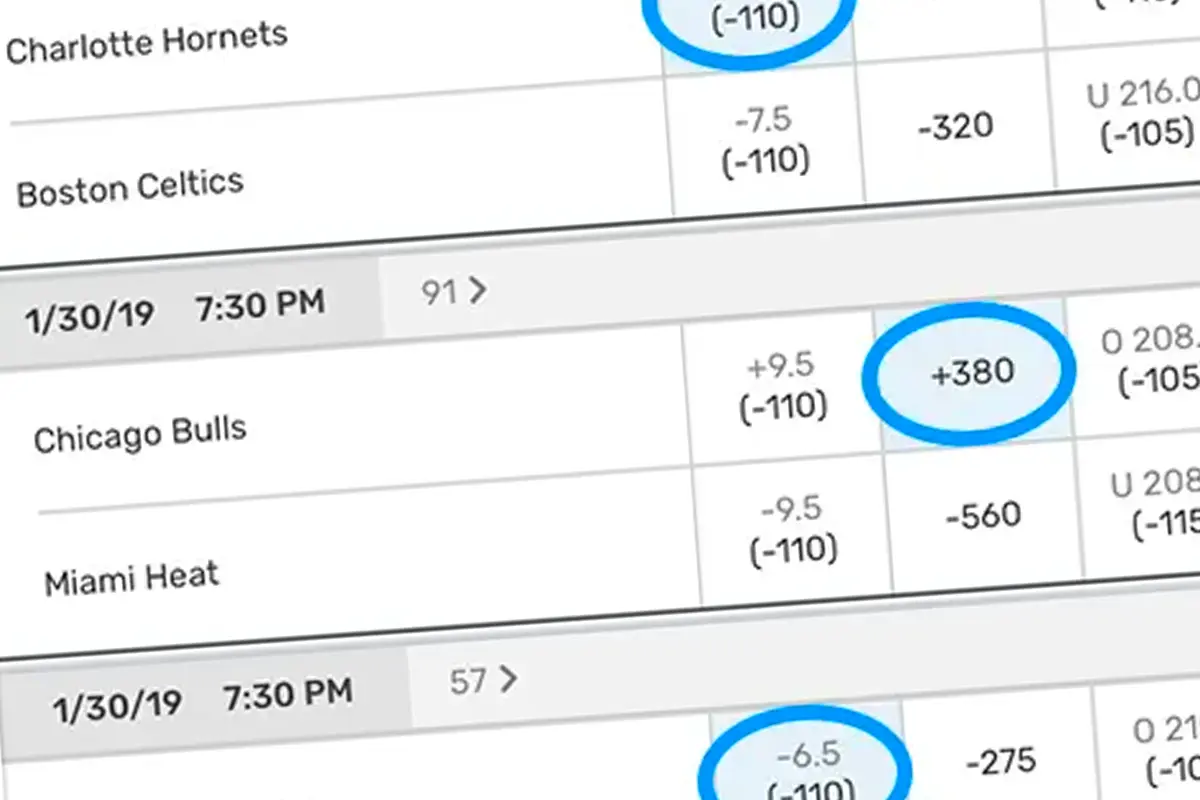
Parlay odds are calculated by combining the odds of each leg. Sportsbooks have their own formulas, but the basic idea is that the odds multiply. A parlay calculator can do the math for you in seconds. A two-leg parlay at -110 odds on each side pays around +264. A three-leg parlay at the same prices jumps to roughly +600. The payouts grow fast as you add legs.
Here is a quick comparison to show why parlays are so appealing. Say you bet $100 on a moneyline at -110 odds. A win pays you about $91 in profit. Now combine that pick with two others at the same odds. Your three-leg parlay at +600 pays $600 in profit on the same $100 stake. The upside is obvious.
The downside is just as real. Books do not pay true odds on parlays. They build a house edge into every leg, and that edge compounds with each pick added. Parlays are the main revenue drivers for sportsbooks for a reason. There is a reason they offer so many boosts and promos around them. Every parlay you create will look amazing on paper, but they will be much tougher to actually win than they appear.
Parlay bet example: real numbers in action
Imagine you are putting together a parlay for an NFL Sunday. You like four moneylines on the board:
| Dallas Cowboys -150 |
| Los Angeles Chargers -110 |
| Buffalo Bills +125 |
| Miami Dolphins +200 |
Betting these four games individually at $100 each costs you $400. If every pick hits, your total profit lands around $585. Not a bad day.
Now imagine you parlay all four picks together. The combined odds jump to roughly +2050. A single $100 on that four-leg parlay would return more than $2,000 in profit. Same picks, very different payout. That is the parlay magic everyone is chasing.
The math works the other way, too. Bet each game separately, lose one, and you still win on the other three. Parlay all four together, lose one, and you walk away with nothing. The same outcome that nets you a profit on straight bets is a total loss on a parlay.
What happens if a parlay leg pushes or gets voided?
A parlay leg can sometimes push, which means the bet finishes in a tie against the sportsbook’s line. For example, if you bet an NFL team +3 and they lose by exactly 3 points, that leg usually pushes.
In a standard parlay, a pushed or voided leg is usually removed from the ticket, and the payout is recalculated using the remaining legs. So if you have a three-leg parlay with two wins and one push, it normally becomes a two-leg parlay instead. The bet can still win, but the payout will be lower than the original amount.
Same-game parlays can work differently. Because the legs are often connected, some sportsbooks void the entire same-game parlay if one leg pushes or gets voided. Others recalculate it. This is why it is worth checking the sportsbook’s house rules before placing same-game parlays.
Different types of parlay bets
The standard parlay is what most people think of, but it is not the only option. Sportsbooks offer several variations that change how parlays work.
What are correlated parlays?
A correlated parlay happens when two picks are closely connected and one outcome directly impacts the other. For example, pairing Patrick Mahomes over passing yards with the Chiefs team total over is correlated because if Mahomes throws for huge numbers, Kansas City is more likely to score a lot of points.
Most sportsbooks restrict heavily correlated parlays because they create an unfair pricing advantage for bettors. Some same-game parlays allow correlation, but the sportsbook adjusts the odds to account for the connection between the picks.
What is a parlay bet strategy that actually works?
No betting strategy is bulletproof, but a few habits can stack the deck a little. For broader sports betting strategies beyond just parlays, there's a deeper guide worth checking out. The first is keeping your parlays small. Two-leg and three-leg parlays have much better win rates than eight-leg longshots. You will not see life-changing payouts, but you will cash more tickets. Stick to moneylines when you can. Moneyline picks are easier to predict than spreads or totals.
You are dealing with wins and losses, not margins or final scores. Spreads and totals work in parlays, too, but the variance is higher. Moneyline parlays also let you take advantage of underdog odds. Heavy underdogs can pump up your payout in a big way.
I can't stress the importance of shopping your lines too. Different sportsbooks post slightly different odds on the same bets. Over a long parlay, these small differences add up to real money. If you have accounts at multiple books, check the prices before locking in your ticket.
Treat parlays as entertainment, not a primary betting strategy. The math is just not in your favor over the long run. Use them as a fun side play with a small stake, not as the foundation of your bankroll. What I would recommend is a 90/10 split. Spend 90% of your bankroll on straights and the remaining 10% on parlays. You get the best of both worlds that way.
When do parlay bets make sense?
Parlays work best when you have a strong conviction on multiple picks. If you genuinely love two or three plays on a given day, combining them gives you a much bigger payout than betting them separately. Just remember that confidence is not the same as certainty. This is one of the biggest lessons to learn when betting parlays.
They also make sense when you want to stretch a small bankroll. A $5 parlay at +2000 odds could net you $100. That same $5 spread across multiple straight bets gets you almost nothing. Parlays let you swing for the fences without putting much at risk.
Underdog parlays are another smart play in the right spots. Stacking two or three underdogs you actually believe in can lead to huge returns. Hitting an unlikely outcome is hard, but the payoff justifies the risk. If you spot two dogs you really like, a parlay can turn a modest stake into a serious win.

Wrapping up the parlay bet
A parlay bet is one of the most popular wagers in sports betting for good reason. It offers the chance to turn a small stake into a big payday. The catch is that every leg has to win. One miss and the entire ticket is worthless.
Parlays come in different forms. Standard parlays, same-game parlays, round robins, and teasers all have their place. Each offers a different risk-reward profile. Knowing which type to use in which situation is half the battle.
Keep your parlays tight, stick to picks you genuinely like, and treat the bigger longshots as entertainment. Pick your legs, build your ticket, and let the games play out. That is the parlay experience in a nutshell.