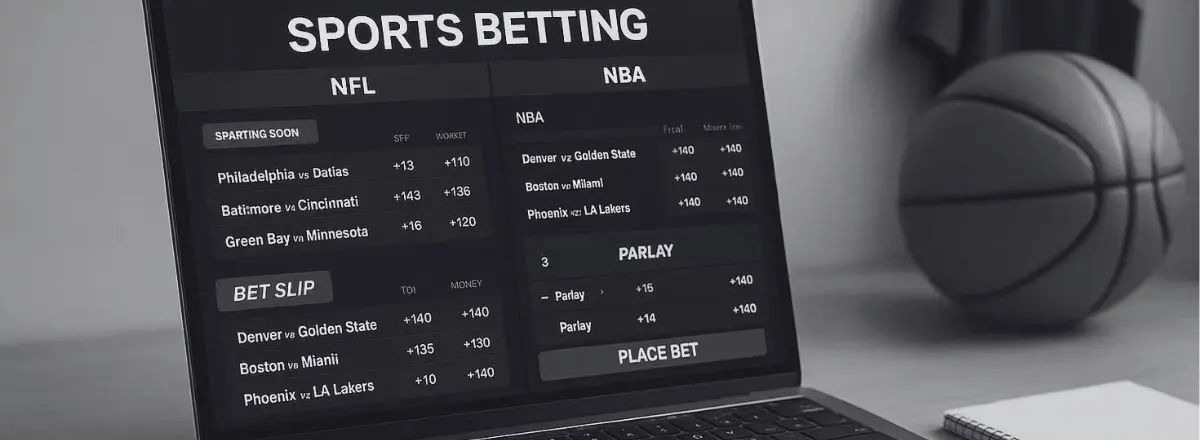
Though South Carolina sports betting remains illegal, an alternative gaming option is officially live in The Palmetto State. You probably already know what it is, because it’s popping up everywhere: sports prediction markets.
The question is: Will prediction markets in South Carolina be legal for much longer?
FanDuel is betting that it will be. The Palmetto State was among the first places in which they debuted their sports prediction markets. Their goal was to open in states without legal sports betting. South Carolina joined Alabama, Alaska, North Dakota and South Dakota. They have since expanded into bigger markets such as Texas, Florida, and yes, California, too.
Launching these services at all implies confidence that the industry will not be collateral damage of South Carolina sports betting laws. Expanding into even more markets is an extension of that implication. But prediction markets are still relatively new. And they are traveling a slippery slope now that they are branching out into territory previously reserved for legal online sportsbooks in the United States.
To this end, there is already talk that South Carolina will attempt to take action against not FanDuel specifically, but sports prediction markets at large.
What Are Sports Prediction Markets?
Since sports prediction markets are only just starting to become mainstream, it’s important to go over the finer points of how they work. The chief question: Why are they permitted despite South Carolina sports betting not yet being legalized?
The reason is…opaque. Those operating sports prediction markets argue they do not qualify as gambling because users are not wagering money against a house. Instead, they are investing in “yes or no” event outcomes, much like they are stocks. The potential return on these “investments” is determined by where other customers are investing rather than the companies (aka “house”) themselves.
For example, let’s say you’re “investing” in the South Carolina Gamecocks football team to beat the Clemson Tigers. If more people are placing their money in the Tigers winning, you stand to earn more if South Carolina emerges victorious. While your return on investment is locked in at the time of your transaction, the overall ROI for a given outcome is more fluid than when you’re usually betting on sports online.
These differences are why prediction markets remain subject to federal regulation rather than state oversight. This is inherently more company-friendly. States cannot only choose whether to legalize sports betting, but they can determine everything from tax rates, to operational guidelines, to the number of licenses they dole out. They have no such power when it comes to sports prediction markets—which is why these markets are so divisive.
Policymakers Believe Prediction Markets Violate South Carolina Sports Betting Laws
Some states are content to let prediction markets launch without much furor. Others are making their stance more clear. The Palmetto State falls into the latter category. They believe that prediction markets are in direct conflict with South Carolina sports betting laws.
As The Post and Courier’s Nick Reynolds reports:
“Courts are weighing legal actions nationwide, and South Carolina views the offerings as being illegal — though the state has not officially sued anyone. ‘We see it as sports betting," Brandon Charochak, a spokesperson for Gov. Henry McMaster, told The Post and Courier. "The governor is against sports betting, has long been against sports betting, campaigned against it. (Prediction markets) are no different than any other form of sports betting, and he sees it as illegal in South Carolina.’ ‘People who are facilitating these markets in South Carolina should be put on notice that they can be arrested and subject to criminal action,’ he added. ‘It's illegal, that's how our office sees it.’”
With South Carolina firmly against prediction markets, it naturally raises a question: Will they do anything to combat them?
Yet, as it turns out, a better question might be: Is there anything that South Carolina can actually do?
There May Be Only One Way For South Carolina To Upend Prediction Markets
Certain states have already filed lawsuits against prediction-market operators. By and large, these motions are to no avail. Even where legislation is pending, prediction markets are allowed to remain up and running.
There is, however, one surefire way to disrupt their ascent: with the legalization of South Carolina sports betting.
States that have already launched sports betting report that prediction markets are having virtually no impact on the legal gambling industry. Granted, prediction markets are young enough that this could change. But it does suggest a state-regulated alternative will appeal to sports fans. It also helps that companies with both prediction markets and sportsbooks have said they will shudder the former if and when gambling becomes legal in states without it.
Whether this will be enough to shift South Carolina’s sports betting stance is debatable. While the House of Representatives seems open to it, Governor Henry McMaster and the Senate are on the complete opposite end of the spectrum.
Perhaps the idea of prediction markets openly circumventing South Carolina’s current sports betting stance will spark a material change in policy. However, The Palmetto’s regular legislative sessions are already underway. So far, there is more chatter about trying to rein in prediction markets than legalizing sports betting.
This itself is something else that can change. And unless South Carolina finds another way to undermine the rise of prediction markets, they may have no other choice.
Take a look at this list of the top online sportsbooks so you can find one that works for all of your sports betting needs:
-
EXCLUSIVE BONUS
 50% up to $250Play Now
T&C apply, 18+, Play responsibly
-
EXCLUSIVE BONUS 125% up to $1,250Play Now
T&C apply, 18+, Play responsibly
-
EXCLUSIVE BONUS 225% up to $3,625Play Now
T&C apply, 18+, Play responsibly
-
50% up to $250Play Now
T&C apply, 18+, Play responsibly
-
125% up to $2,500Play Now
T&C apply, 18+, Play responsibly