
Over the past few years, prop betting has morphed into one of the sports gambling industry’s powerhouse markets.
As more and more states have rolled out legal wagering, tried-and-true options such as the straight moneylines, over/unders and point spreads are no longer enough. Users want options. This has given way to an explosion of prop betting markets.
Prop betting strategies
Once upon a time, these “micro” wagers were reserved for tent-pole events. You would bet on NFL props during the Super Bowl, or on college football props during bowl season. So on and so forth.
Now, though, you can work these markets for just about any game across one of the major leagues. It doesn’t matter whether you’re betting on the NBA Finals or a random Tuesday night game in January, the NBA’s prop betting market is teeming with possibilities all the time.
The same goes for the NFL, NHL, MLB and MLS. In fact, many sportsbooks now report that huge portions of their betting handles are from prop markets.
At this point, if you’re at all interested in sports betting, prop betting has become a major part of modern sports wagering. And just like any other aspect of sports wagering, it is important to have a strategy in place. Making plans in advance teaches you discipline, and when done right, can help bettors make more structured and informed decisions.
Of course, finding, understanding, choosing and perfecting prop betting strategies can be a ton of work. Luckily, we are here to streamline much of it for you.
We are going to run through our favorite prop betting strategies in increasing order of appeal, discuss what they are, why we like them, potential downsides and all that good stuff. At the end of each section, we will also blitz through our favorite sports for which to use these strategies, with an exclusive focus on the NFL, college football, NBA, college basketball, NHL, MLB and soccer. Let’s hop to it!
How to bet on props
Our complete sports wagering guide will cover the nature of prop bets in more detail, but for now, here’s what you definitely need to know before delving into potential approaches.
First and foremost, prop odds cannot be put into a box. The question of “What are they” is both valid and difficult to answer.
Because, truthfully, prop bets can be basically anything.
Consider normal single-game wagers for a second. You’re trying to predict outcomes, be they winners, spread covers, or total scores represented by the over/under. Prop betting, in contrast, is more about forecasting events that happen within a game. They deal in outcomes by quarters and halves, and their entire-contest contests are rooted in a player- and team-specific benchmarks.
The most common question about props betting continues to be “What exactly is it?” It’s an incredibly fair inquiry. And the answer is: It’s a little bit of everything.
Some people consider props to be the futures market, which consists of placing wagers on division, conference, and championship victors, or entire-season totals. That’s all well and good, but props betting far from stops there. In general, actually, it’s more unconventional than that.
For the sake of an example, let’s say you’re looking to play some props on an upcoming 2025/26 matchup between the Denver Nuggets and Boston Celtics. Some potential lines you might encounter are:
| Over/under on the number of points scored by Jayson Tatum |
| Over/under on the number of assists dished by Nikola Jokić |
| A bet on whether there will be an overtime period |
| Over/under on the number of three-pointers the Nuggets will make |
| Over/under on the number of rebounds the Celtics will tally |
What you’ll notice about these examples is that they’re heavy on over/under choices. That’s the nature of many player- and team-specific props. These markets often hover around standard odds in the -110 to -120 range, though lines can swing wider depending on the matchup and player performance expectations.
In the event you’re looking for higher possible payouts, you’ll need to target props with more open-ended outcomes, where you’re betting against a larger field. For this Nuggets-Celtics game, one potential prop could be “Which player will hit the first three-pointer of the night?” The lines on this might look something like:
| Jayson Tatum (+150) |
| Jaylen Brown (+175) |
| Nikola Jokić (+225) |
| Jamal Murray (+200) |
| Michael Porter Jr. (+250) |
Should you be trying to plumb point-spread-like props, you’ll need to be on the hunt for more granular closed-ended outcomes. This essentially means you’ll be looking at who wins certain quarters and halves. For our Nuggets-Celtics hypothetical, these bets might include:
- First-quarter point spread: Celtics (-2.5), Nuggets (+2.5)
- Second-quarter point spread: Nuggets (-1.5), Celtics (+1.5)
- First-half point spread: Celtics (-3.5), Nuggets (+3.5)
- Third-quarter point spread: Nuggets (-2.5), Celtics (+2.5)
- Fourth-quarter point spread: Celtics (-1.5), Nuggets (+1.5)
- Second-half point spread: Nuggets (-2), Celtics (+2)
Though these prop lines are often available prior to the start of games, they can also be a form of live betting. Many people prefer to work them in that fashion because they have a better feel for how the game is unfolding. This is considered especially valuable as it pertains to the second half. The spread over the latter two frames can drastically wax or wane depending on whether one team is blowing out the other.
Meanwhile, select prop lines don’t even have anything to do with the game itself. You can wager on what color shirt a coach or halftime performer is wearing. For NFL betting odds and college football betting odds, you can wager on the result of the coin toss. Across all sports, meanwhile, you can bet on the player and team stat lines in specific categories.
How to find value in prop bets
Finding value in prop bets means looking for lines where the odds may not fully reflect the true chance of an outcome. The goal is not just to pick a player or team you like, but to spot situations where the sportsbook number looks slightly off.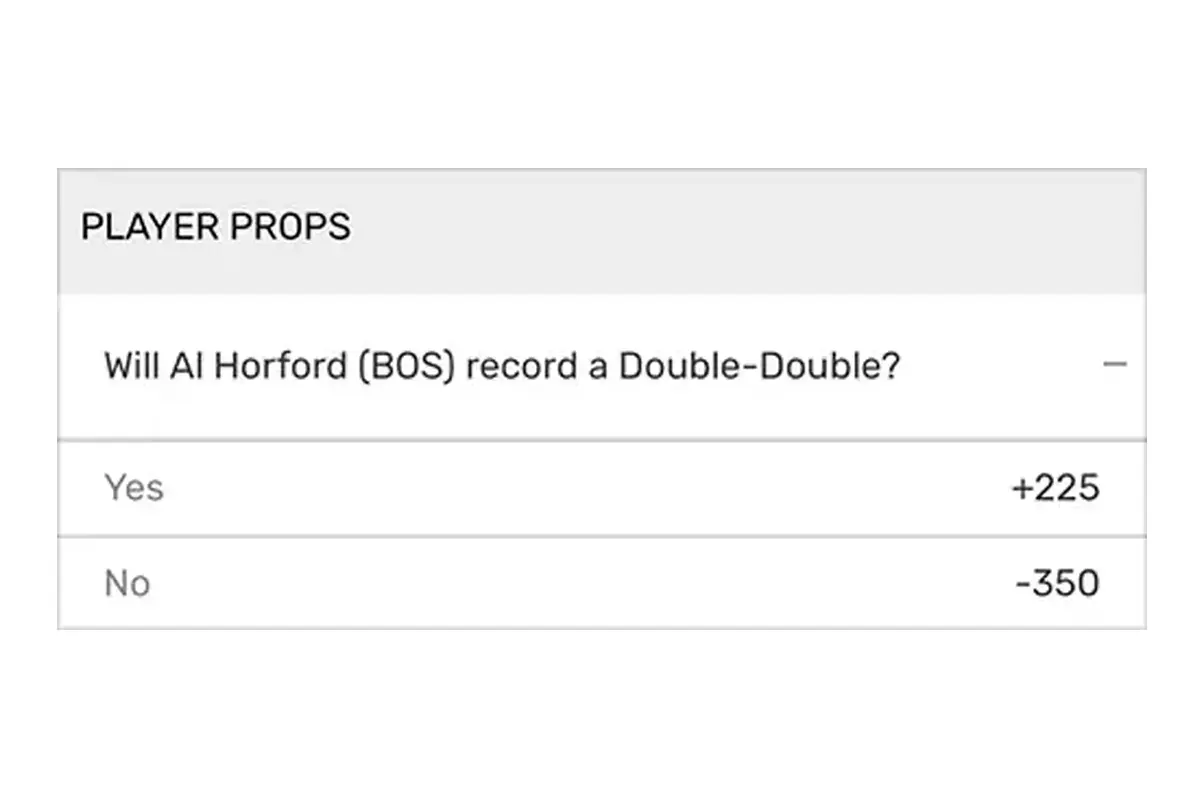
Start by comparing the same prop across different sportsbooks. For example, one book might list a player’s rushing yards at 62.5, while another has the same player at 66.5. That difference can matter, especially in player props where a few yards, rebounds, shots, or assists can decide the bet.
Next, check the context behind the line. Injuries, lineup changes, weather, pace of play, matchup strength, and recent usage can all affect whether a prop has value. A wide receiver may look attractive on paper, but if his starting quarterback is injured or the game forecast calls for heavy wind, the over may be less appealing.
It is also important not to chase props only because a player has been hot recently. Recent form matters, but it should be weighed against role, minutes, opponent, and whether the sportsbook has already adjusted the line. Popular players often attract public betting, which can push their props into less favorable territory.
A good prop betting strategy is built on price, context, and discipline. If the number is no longer favorable, it is usually better to pass than force a bet.
Our favorite prop sports betting strategies are…
These rankings reflect the prop sports betting strategies that intrigue us the most relative to potential effectiveness, safety, and the simplicity with which they can be applied and understood.
1. Skills-only prop betting
What is the skills-only prop betting strategy?
A skills-only prop betting strategy refers to focusing on micro events surrounding the game rather than the game itself. So, instead of betting on how many touchdowns Patrick Mahomes of the Kansas City Chiefs will throw against the Baltimore Ravens, you would bet on which color uniforms one of the teams would wear.
What is the primary benefit of this prop betting strategy?
While these markets are called “skill” wagers, they are actually change-of-pace bets. They allow you to journey off the beaten path and give yourself a break from tracking run-of-the-mill player and team stats.
The skills-only prop betting strategy can also be useful when you drop the “only.” If you are into building a betting slip with multi-leg parlays, these micro wagers surrounding an event or season can be a nice way to increase the potential payout as an add-on at the end of your ticket.
Example of skills-only prop betting
For argument’s sake, let’s assume the Ravens and Dallas Cowboys are meeting in the next Super Bowl. These are just a couple of “skills” prop bets that will be available:
- Coin toss result: Heads or tails?
- What will the coin-toss winner do: Kick or receive?
- What's the over/under on the length of the national anthem?
- Will one jet or multiple jets fly over the stadium during the national anthem?
- What color shirt will the halftime performer be wearing?
As you can tell, these prop bets tend to be binary “yes or no” events. But every so often, you will see multi-layered skill options. For example, there could be a “How many wardrobe changes will the halftime performer make?” option on the ticket. In this case, sportsbooks will generally include a bunch of different options (one, two, three, etc.) rather than a singular set over/under.
What is the primary downside of skills-only prop betting?
Skill props tend to be seasonal and aren’t available in all markets. While you might see them crop up during the college football playoffs or at the NBA All-Star Game, they are at their most popular during the NFL’s postseason. Regular-season options across all sports are rather limited. So, as an NFL prop betting strategy, this is rock solid. Elsewhere? Not so much.
Which events are best for this prop betting strategy?
- Super Bowl
- NFL playoffs
2. Major event prop betting
What is the major event prop betting strategy?
This prop betting strategy is essentially a nod to how these markets used to work. Way back when, you would predominantly see the widest sports prop betting markets around the Super Bowl and college football bowl games.
What’s more, football basically had a monopoly over sports betting markets. You might see expanded options for MLB, NBA, NHL and soccer around the playoffs and championship bouts, but they paled in comparison to NFL prop betting and college football prop betting.
Following the major-events-only strategy entails you shifting focus depending on the time year. The NFL and college football are the apple of your eyes in January and February. The NHL and NBA take center stage in late spring during their playoffs. Major League Baseball gets your attention in the fall. And you would tailor your soccer prop betting to whenever the most popular tournaments are taking place.
What is the primary benefit of limiting prop betting to major events?
Employing this prop betting strategy allows you to bounce from sport to sport, ensuring additional layers of variety in your sportsbook diet. On top of that, you are also typically dealing with the broadest possible markets.
Example of major event prop betting
Let’s say it’s February, and the Super Bowl is coming up. You would shift all of your attention to betting NFL props, since the Super Bowl is when options you didn’t even know existed bubble to the surface.
These wagers could be on anything from the result of the coin toss to how many passing yards one of the starting quarterbacks will have.
What is the primary downside of betting on props during major events only?
Limiting yourself to only major events can be difficult if you’re not a fan of multiple sports. If you are diehard NFL fan who doesn’t follow other leagues, you won’t want to prioritize playoff baseball in the fall when the football season starts up.
Which markets are best for this prop betting strategy?
- Super Bowl
- NFL playoffs
- College football playoffs
- College football national championship
3. Live game prop betting
What is the live game prop betting strategy?
Just as the prop market has exploded, so too have live betting markets. You used to be limited strictly to live betting moneylines, point spreads or over/unders for the end result. Now, however, most sportsbooks break this down in micro wagers.
You can bet on the moneyline or point spread for a quarter, period or half. Many sportsbooks will also update their player prop wagers in real-time as well, allowing you to increase your options even further.
What is the primary benefit of this prop betting strategy?
The live-game prop betting strategy is useful for a multitude of reasons.
Perhaps you forgot to bet on Chiefs vs Ravens and still want to get in on the action. Or maybe you placed a pregame wager that isn’t looking great and you’d like to course correct.
Some people even prefer to get a feel for a game or match, form an opinion and place bets from there, as things are happening, rather than doing so before the event in question starts.
Example of live game prop betting
Let’s stick with our Chiefs vs. Ravens example. Hypothetical mid-game moneylines could like something like this:
- First-quarter moneyline: Chiefs (-550), Ravens (+350)
- Second-quarter moneyline: Chiefs (-600), Ravens (+350)
- First-half moneyline: Chiefs (-350), Ravens (+275)
- Third-quarter moneyline: Chiefs (-150), Ravens (+125)
- Fourth-quarter moneyline: Chiefs (+115), Ravens (-250)
- Second-half moneyline: Chiefs (-110), Ravens (-105)
The same thing can be done with point spreads and over/under betting, too.
What is the primary downside of live game prop betting?
Markets for live prop betting usually don’t measure up to the options at your disposal into the lead-up.
Sure, you will not have any issue finding mid-game moneylines, over/unders and point spreads. But if you want to bet on player props, you are better off doing so in advance of a game or match. For the most, only the NFL seems to have a robust offering of mid-game player props. And depending on the sportsbook, even those can be limited outside of the playoffs and Super Bowl.
Which markets are best for this prop betting strategy?
- NFL
- College football
- NBA/WNBA
- College basketball
4. Player prop betting
What is the player-focused prop betting strategy?
We have danced around player prop betting a bunch of times already. Now it’s time to dig in.
Player props refer to any wager that focuses on an individual’s end result rather than that of the team or general competition. So, instead of betting on the outcome of Ravens vs. Chiefs, you might place money on a Patrick Mahomes- or Lamar Jackson-centric wager.
What is the primary benefit of this prop betting strategy?
Player props allow you to capitalize on a game, match, competition, whatever without needing to predict the exact end result. Sure you can still bet on the Chiefs to beat the Ravens or on Baltimore to cover the point spread versus Kansas City. But if you believe the matchup is too close to call or aren’t thrilled with the odds, you can take your business to individualized wagers.
Example of player-focused prop betting
Here are just a couple of football prop betting options you might see in advance of a Chiefs-Ravens game:
- Patrick Mahomes passing yards: Over/under 255.5
- Lamar Jackson rushing yards: Over/under 60.5
- Travis Kelce receptions: Over/under 4.5
- Zay Flowers touchdowns (total): Over/under 0.5
- Tyler Loop field goals made: Over/under 2.5
True to the examples above, player prop bets typically come in the form of over/under lines.
What is the primary downside of player-focused prop betting?
Though betting on player props has a ton of upside, it also comes with an abrupt downside. If a player checks out of a game early with an injury or because his team is blowing out their opponent, anyone who bet the “over” becomes much less likely to cash.
We highly recommend signing up with a reputable sportsbook that will remedy some of these issues. You won’t have your wager refunded just because someone plays less in a blowout, but many sports betting sites will credit you if a player leaves the game early due to injury within a certain timeframe.
Which markets are best for this prop betting strategy?
- NFL
- College football
- NBA/WNBA
- College basketball
- NHL
- MLB
- Soccer
5. Parlay player prop betting strategy
What is the parlay player prop betting strategy?
This is an extension of the player prop betting strategy. It is most often employed as an NBA prop betting strategy, NHL prop betting strategy or MLB prop betting strategy, because these leagues have a handful of games each week during their season. But it is suitable for every sport.
Here’s how it works: You pair two or more player props to the same ticket as a parlay. Going this route increases the ceiling on your potential return, with the caveat that every prediction must hit, otherwise you lose. So, if you build a five-player-prop parlay and four of your submissions hit, you still lose. If all of them hit, though, you are likely looking at a larger potential payout.
This prop betting strategy is popular among those who like to ride streaks. Many bettors find a number they like that a player has hit seven or eight times in the past 10 games. (That larger sample size is why this approach can be a trickier college football prop betting strategy or soccer prop betting strategy. It takes too long for trends like that to build up.)
For example, let’s say Nikola Jokić of the Denver Nuggets is listed with an over/under of 9.5 assists for his next game. You look and see that he’s dished out 10 or more dimes in nine of the past 10 games. The “over 9.5” would be your choice. Find two or more trends like this, and you have your ticket.
What is the primary benefit of this prop betting strategy?
Stacking multiple player props on top of one another can turn otherwise pedestrian payout possibilities into sizable ones. That makes this an ideal prop betting strategy for anyone who prefers to traffick in payouts longer than 1-to-1.
Example of parlay player prop betting
Okay, let’s assume you’re on your sportsbook of choice and see the following player props:
- Nikola Jokić over 9.5 assists (-110)
- Shai Gilgeous-Alexander over 30.5 points (-105)
- Victor Wembanyama over 2.5 blocks (-125)
- Karl-Anthony Towns under 10.5 rebounds (-120)
To win $100 on any of these lines, you need to risk over $100. If you put a c-note on each one, you would have $400 on the line for a chance to profit $349.48. That’s perfectly fine.
However!
If you parlay these four player props together, you receive +1130 odds. So, for each $100 you bet, you would win $1,130.01—for a profit of $1,030.01.
What is the primary downside of parlaying player prop betting
Parlaying player props sounds great when you’re talking about prospective payouts, but these wagers are incredibly tough to hit. You need every leg (i.e. individual wager) on your parlay to pan out, otherwise you walk away with nothing. The more bets you add to your parlay, the more likely you are to lose.
For beginners, we would recommend sticking with two- or three-bet parlays. You can always crank up the difficulty from there. No matter your experience level, though, parlay player prop betting should be done using smaller amounts than you’d normally wager. Since the odds are always going to be longer, you want to hedge as much of your risk as possible.
Which markets are best for this prop betting strategy?
- NFL
- College football
- NBA/WNBA
- College basketball
- NHL
- MLB
- Soccer